A damp patch or brown stain on a chimney breast is a classic UK “mystery leak”. It often shows up after heavy rain, sometimes only in wind, and it can spread across plaster faster than you’d expect. However, the chimney breast is just where the water ends up — the actual entry point is usually outside at roof level.
Most of the time, the cause comes down to two main suspects: chimney flashing or chimney pointing. That said, the chimney top, nearby tiles, and even condensation can also play a part. Therefore, the goal is to narrow it down safely and then get the right fix and chimney repairs.
First: Is It Definitely a Leak (Not Condensation)?
Before you assume it’s rain ingress, check the pattern:
More likely a leak if:
- It worsens after rainfall (especially wind-driven rain)
- You see staining that grows over time
- The loft insulation near the chimney feels damp
- You notice damp brickwork externally below the flashing
More likely condensation/salts if:
- It appears even in dry spells
- The fireplace/flue is unused and the room is cold
- The damp feels “sticky” and keeps coming back after decorating
If it clearly follows rainfall, treat it as a roof/chimney leak and move to the checks below.
Chimney Flashing vs Pointing: What’s the Difference?
Chimney flashing (most common)
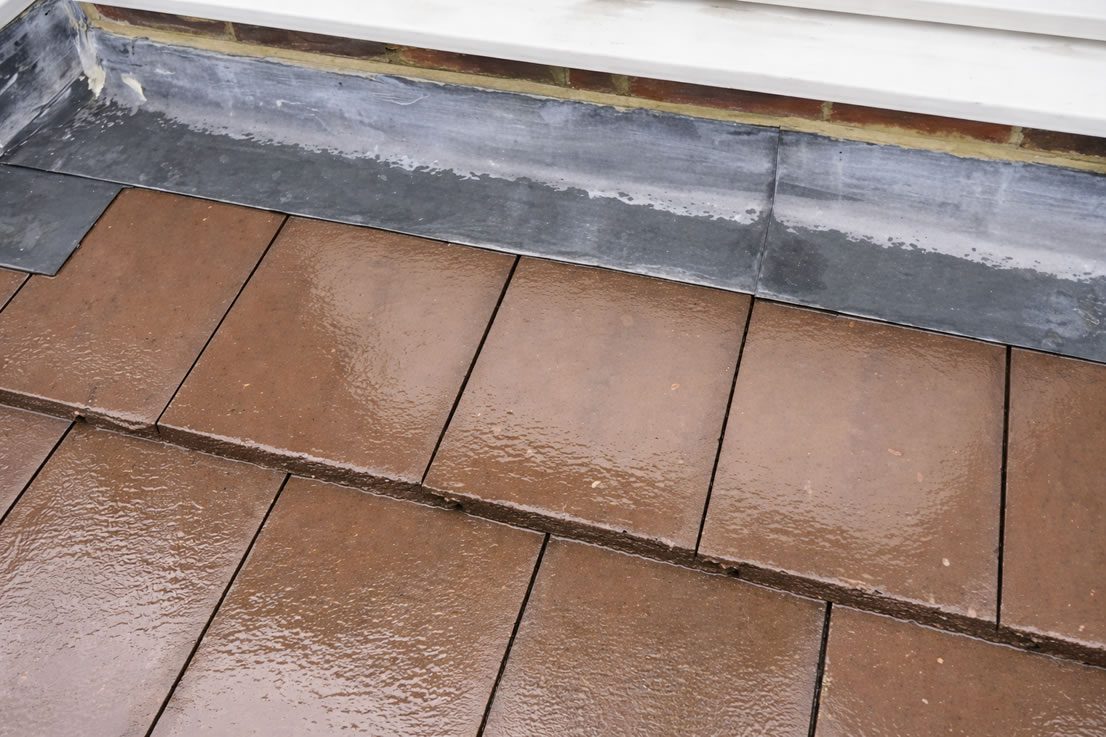
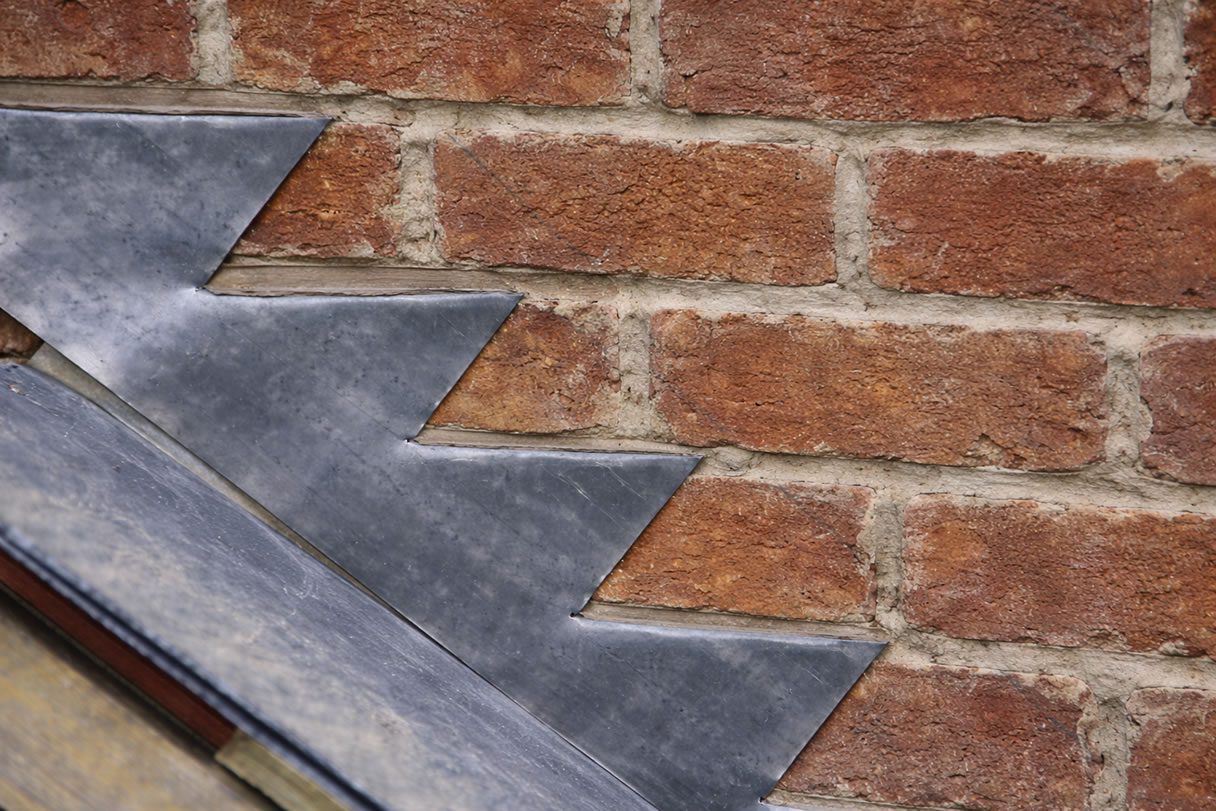
Flashing is the weatherproof barrier where the chimney meets the roof. It’s usually lead, formed in steps along the sides and finished with an apron at the bottom.
A flashing problem often causes:
- Leaks that appear only in heavy rain or wind-driven rain
- Damp patches that start near the upper chimney breast or nearby ceiling line
- Staining that can appear suddenly after a storm
Why it leaks: water gets behind lifted lead, failed joints, or a cracked chase line (where lead is tucked into mortar).
Chimney pointing (very common, but slower)
Pointing is the mortar between the chimney bricks. When it cracks and crumbles, the chimney stack can absorb rain like a sponge. Then it slowly releases moisture inside.
A pointing problem often causes:
- Damp that feels persistent and takes ages to dry
- Brickwork that looks weathered, with mortar missing or powdery
- Staining that develops gradually, not always linked to one storm
Why it leaks: rain penetrates through gaps in mortar, soaks the chimney, and eventually shows up on internal plaster.
Quick Comparison Table: Flashing vs Pointing
| Symptom | More likely flashing | More likely pointing |
|---|---|---|
| Leak appears mainly in storms/wind | ✅ | |
| Damp shows after a specific heavy rain event | ✅ | |
| Damp is slow, persistent, “always there” | ✅ | |
| Mortar joints look cracked/missing outside | ✅ | |
| Lead looks lifted or messy around chimney | ✅ | |
| Staining is worst near ceiling line | ✅ | |
| Chimney bricks look saturated after rain | ✅ |
Other Common Causes (Often Missed)
Even if flashing/pointing are the main suspects, roofers also check:
1) Chimney top problems (flaunching, pots, cowls)
Water can enter from above if the top mortar (flaunching) has cracked or if pots/cowls are loose.
2) Broken/slipped tiles around the chimney
A small gap beside the stack can send water straight into underlay, then into the chimney breast area.
3) Valley or debris above the chimney
If a valley above the chimney blocks up, water backs up and finds the weakest route — which might be the chimney junction.
4) Underlay tracking
Water can run along underlay and show up away from the entry point. That’s why a loft check helps.
5) Condensation and hygroscopic salts
Especially with unused fireplaces, damp can be internal rather than rain ingress. A roofer can rule out roof-level entry points first. If fireplaces are unused then there’s also an option to remove chimney completely, but that sometimes is a costly and dirty work that isn’t for the fainthearted.
Safe Checks You Can Do (No Roof Climbing)
1) Check the timing
Note if it’s linked to wind-driven rain. If yes, flashing and junctions move up the list.
2) Inspect from the ground
Stand back and look for:
- lifted lead edges
- cracks in mortar around the lead chase
- broken tiles near the chimney
- missing caps or damaged chimney pots
A zoom photo helps.
3) Check the loft (if safe)
Look for:
- damp timbers near the chimney
- wet insulation around the stack
- daylight gaps near the chimney junction
- water trails down rafters
If you see active dripping, you’ve got a strong case for a roof-level entry point.
What the Roofer Will Usually Do (And What a Proper Fix Looks Like)
If it’s flashing
A roofer may:
- re-dress and secure lead
- repair or replace step flashing and soakers
- re-cut and seal the chase line properly
- re-seat tiles around the stack
A “sealant-only” fix rarely lasts, especially on chimneys.
If it’s pointing
A roofer or builder may:
- rake out failed mortar and repoint properly
- repair cracked brickwork
- address the top details (flaunching) if needed
Often, the best result comes from combining roof junction work with chimney masonry repairs where necessary.
Typical Costs (UK Guide)
| Repair type | Typical cost range |
|---|---|
| Minor flashing re-dress / local repair | £200–£450 |
| Replace chimney flashing (more involved) | £450–£1,500 |
| Partial chimney repointing | £350–£1,200 |
| Flaunching repair (chimney top) | £250–£900 |
| Chimney cowl fit/replace | £150–£450 |
| Scaffolding (if required) | £450–£2,000+ |
Costs vary mostly by access, height, and chimney size.
When to Call a Roofer (Don’t Wait If…)
Call promptly if:
- staining grows after each rainfall
- the ceiling near the chimney line starts bubbling
- damp reaches electrics or light fittings
- you see loose tiles or visible gaps around the chimney
- the loft insulation is wet near the stack
FAQs
Can a chimney breast leak be caused by the roof even if the chimney looks fine?
Yes. Flashing and tiles around the chimney can fail even when brickwork looks OK from the ground.
Is pointing always the culprit?
No. Flashing is a very common cause, especially when leaks appear in storms.
Should I replaster before fixing the leak?
No. Fix the external entry point first, then let the area dry before redecorating.