
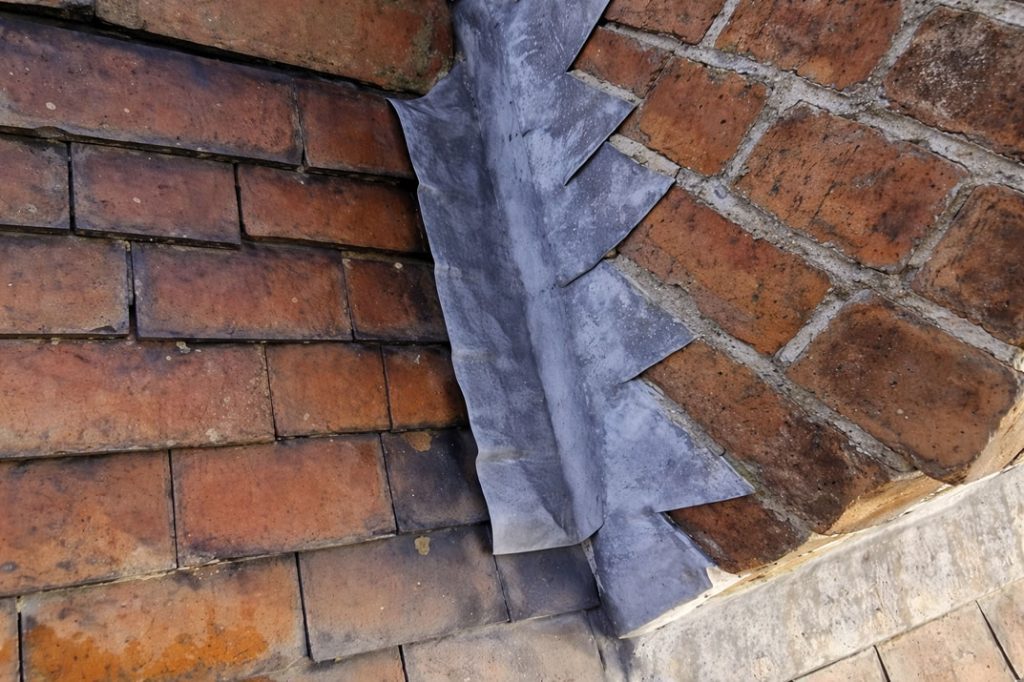
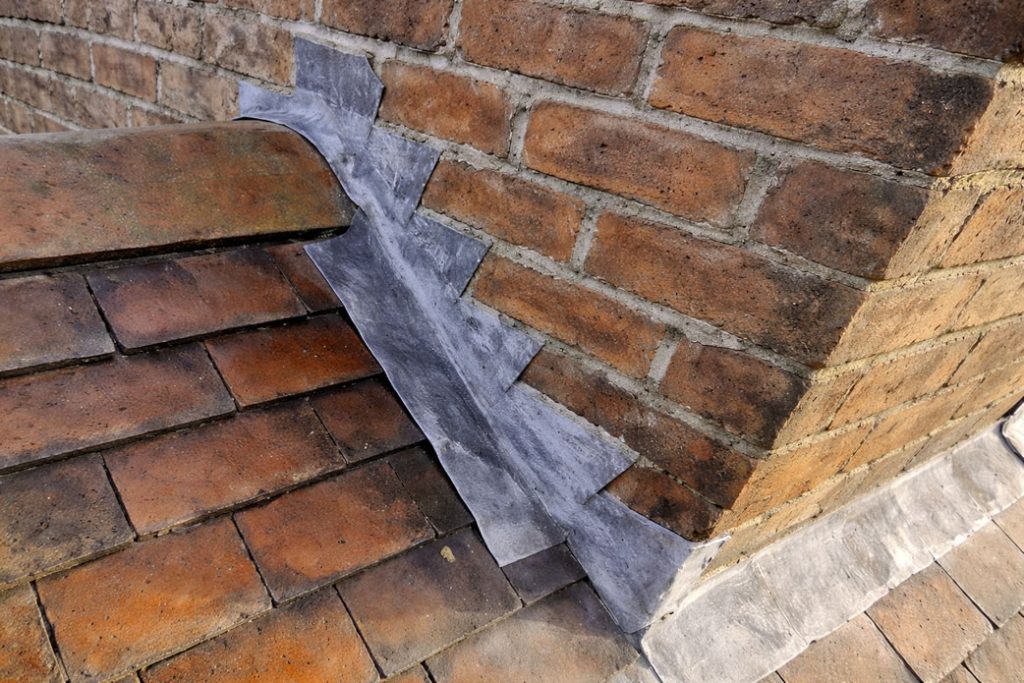
Roof Repairs UK helps you compare free, no-obligation quotes from local roofers for:
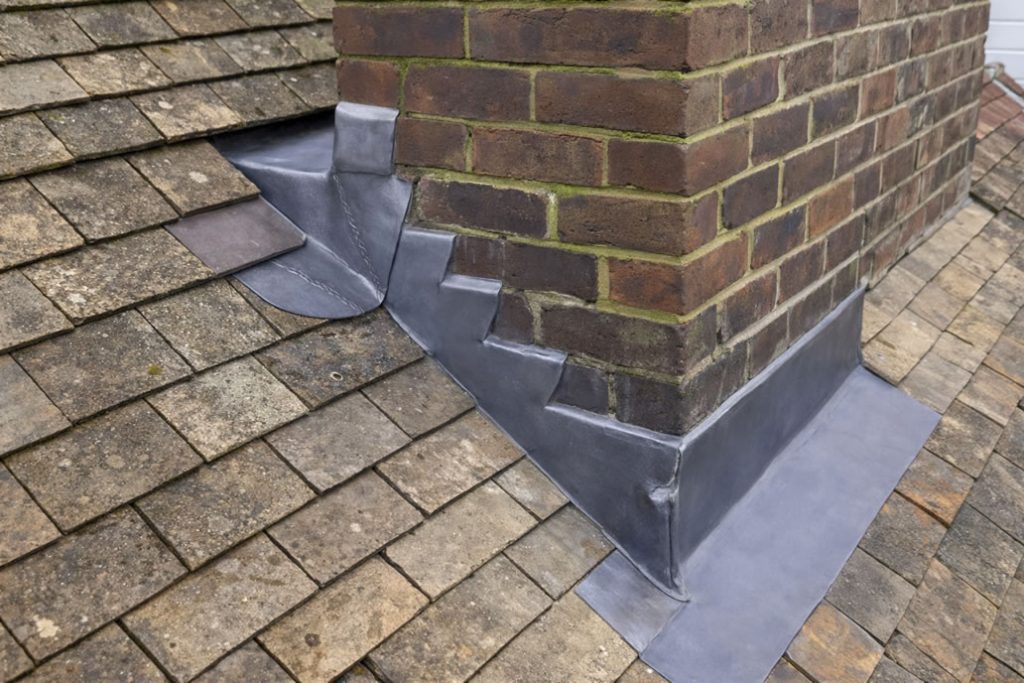
- Chimney flashing repairs (step flashing, cover flashing, back gutter areas)
- Apron flashing at roof-to-wall junctions
- Dormer and extension flashing repairs
- Valley junction leadwork where required
- Re-dressing, resealing, or replacing failed lead sections
Describe the leak area + add your postcode to get lead flashing repair quotes.
Signs You Need Lead Flashing Repair
Look out for these common symptoms:
- Damp patches around a chimney breast or fireplace
- Leaks that happen mainly in wind-driven rain
- Water marks where a roof meets a wall (side return/extension)
- Loose, lifted, or rippled lead visible from ground level
- Mortar cracks along the flashing line
- Drips in the loft near a chimney, dormer, or roof junction
Why Lead Flashing Fails
Lead lasts a long time, however poor detailing, movement, or cracked joints can still cause leaks.
| Cause | What happens | Typical repair |
|---|---|---|
| Lead lifts or pulls away | Water runs behind the lead | Re-dress lead and secure fixings |
| Cracked mortar at the chase | Gaps open where lead sits in brickwork | Repoint/seal chase and re-fix lead |
| Split lead or pinholes | Water penetrates damaged sections | Replace local lead sections |
| Poor overlap or detailing | Wind-driven rain forces water under laps | Correct overlaps and junction detailing |
| Movement around chimneys/dormers | Joints open over time | Rework flashing corners and steps |
| Debris build-up at junctions | Water backs up and tracks inside | Clear debris and check outlet paths |
Lead Flashing Repair Cost Guide (UK)
Costs depend on access, the length/complexity of the flashing, and whether the roofer needs scaffolding to do the job safely.
| Repair type | Typical cost range | Notes |
|---|---|---|
| Minor flashing re-dress / reseal (localised) | £200–£450 | Good for early-stage leaks |
| Replace short lead section (localised) | £300–£800 | Often around chimneys/dormers |
| Chimney flashing repair/replacement (larger scope) | £450–£1,500 | Depends on stack size and access |
| Roof-to-wall flashing repair | £250–£900 | Common on extensions/side returns |
| Leadwork around dormer (localised) | £350–£1,200 | Corners and steps add complexity |
| Scaffolding (if required) | £450–£1,800+ | Often needed for chimneys |
Tip: Flashing jobs fail when roofers rush access or skip proper detailing. Therefore, treat “safe access and neat finishing” as part of the value, not an optional extra.
Common Places You’ll Find Lead Flashing
Leadwork appears anywhere the roof needs a watertight seal at a junction, for example:
- Chimney stacks
- Dormers
- Roof-to-wall edges on extensions
- Around roof windows where lead is used
- Abutments and step flashing zones
- Valleys and back gutters in specific roof designs
Because water travels, a roofer will check adjacent areas too, such as tiles/slates, underlay edges, and gutter outlets.
What a Good Lead Flashing Repair Usually Includes
When you compare quotes, look for a clear process.
| Included task | Why it matters |
|---|---|
| Identify the true entry point | Stops repeated “patch and pray” repairs |
| Re-dress or replace lead with correct overlaps | Prevents wind-driven rain ingress |
| Secure fixings and tidy the chase line | Stops lead lifting again |
| Check corners, steps, and back-gutter areas | These points fail first |
| Replace any damaged tiles around junction | Prevents secondary leaks |
| Clean up debris and test water flow | Reduces future tracking and overflow |
Can You Temporarily Fix a Flashing Leak?
You can limit internal damage while you wait, but avoid climbing on roofs and don’t rely on sealant as a long-term fix.
Instead:
- Contain water indoors and move valuables
- Photograph the leak area and the outside junction from ground level
- Note when it leaks (heavy rain, wind, constant drip)
- Submit your enquiry with those details
How to Get Lead Flashing Repair Quotes
Step 1: Describe where the leak shows up
For example: “chimney breast damp”, “leak where roof meets wall”, or “dormer leak in heavy rain”.
Step 2: Add your postcode
Then roofers who cover your area can respond.
Step 3: Compare quotes and choose
Finally, compare scope, access requirements, timescales, and cost.
Get Free Lead Flashing Repair Quotes
FAQs – Lead Flashing Repairs
Is flashing the most common cause of chimney leaks?
Often yes. The chimney/roof junction takes a lot of weather, so small gaps can leak quickly. However, pointing, flaunching and tiles around the chimney can also contribute.
Will a roofer repair or replace flashing?
It depends on condition. If the lead is intact and just lifted, a repair may work. If lead has split or perished at joints, replacement usually makes sense.
Can you repair flashing without scaffolding?
Sometimes. However, chimney flashing often needs safe access. Therefore, many roofers use scaffolding to deliver a durable fix.
Why does the leak only happen in wind-driven rain?
Wind pushes water up and sideways. As a result, small gaps at overlaps and corners can leak even when the roof seems fine in light rain.
Will flashing repairs stop leaks permanently?
A proper repair should. Still, roofers should check nearby tiles, valleys, and gutters because water can enter from more than one weak point.