
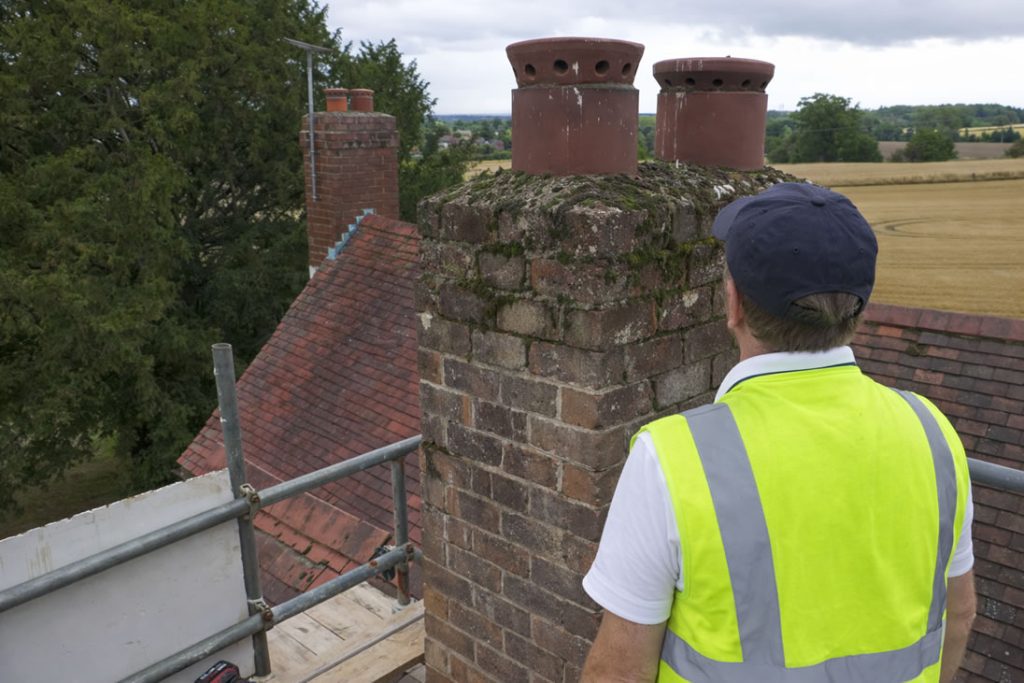
Roof Repairs UK helps you compare free, no-obligation quotes from local specialists for chimney removal-related work, including:
- Internal chimney breast removal (ground floor and/or first floor)
- External stack removal (above roofline)
- Full chimney removal (subject to structural requirements)
- Making good the roof after removal (tiles/slates, ridges, flashing)
- Chimney capping and ventilation as an alternative to removal
Describe what you want removed + add your postcode to get quotes.
Chimney Removal Options (What Can Be Removed?)
Chimneys have multiple parts. Therefore, you can often remove only the section you need.
| Removal type | What it means | Typical reasons |
|---|---|---|
| Remove chimney stack (above roofline) | Removes the external brick stack on the roof | Leaks, instability, storm damage, reduce maintenance |
| Remove chimney breast (internal) | Removes masonry inside the property | Create space, renovations, layout changes |
| Remove ground-floor breast only | Keeps upper breast supported by a beam | Partial renovation, budget control |
| Full chimney removal | Removes stack + internal breast sections | Major renovation, unused chimney throughout |
Important: Internal breast removal often needs structural support (such as steel beams) and may require Building Regulations involvement.
Do You Need Building Control for Chimney Removal?
In most cases, yes — at least for internal chimney breast removal, because the work often affects structure. Building Control approval helps ensure safe support, proper load transfer, and compliant workmanship.
Also, if you share a chimney with a neighbour (terraced or semi-detached homes), you may need to consider party wall requirements before work begins.
If you submit an enquiry, the contractor can advise what applies to your property and the type of removal you want.
Chimney Removal Cost Guide (UK)
Prices vary by:
- property type (terraced/semi/detached)
- access and height
- how much chimney you remove
- structural support required
- waste removal (masonry is heavy)
- roof making-good (tiles/slates, ridge, flashing)
Use these as typical guide ranges:
| Job type | Typical cost range | Notes |
|---|---|---|
| Remove external stack (above roofline) + make good roof | £900–£2,500 | Depends on height/access and roof covering |
| Remove chimney breast (one room) | £1,200–£3,500 | Often needs structural support |
| Remove chimney breast (two floors) | £2,500–£6,500 | Larger structural work and debris removal |
| Full chimney removal (stack + internal) | £3,500–£10,000+ | Major works; varies heavily by property |
| Chimney cap + ventilation (alternative) | £150–£500 | Can reduce rain entry without removal |
Tip: A quote should clearly separate demolition, structural support, making good, plastering, and roofing works.
What Happens During Chimney Stack Removal (Above Roofline)?
A typical process looks like this:
- The contractor sets up safe access (often scaffolding).
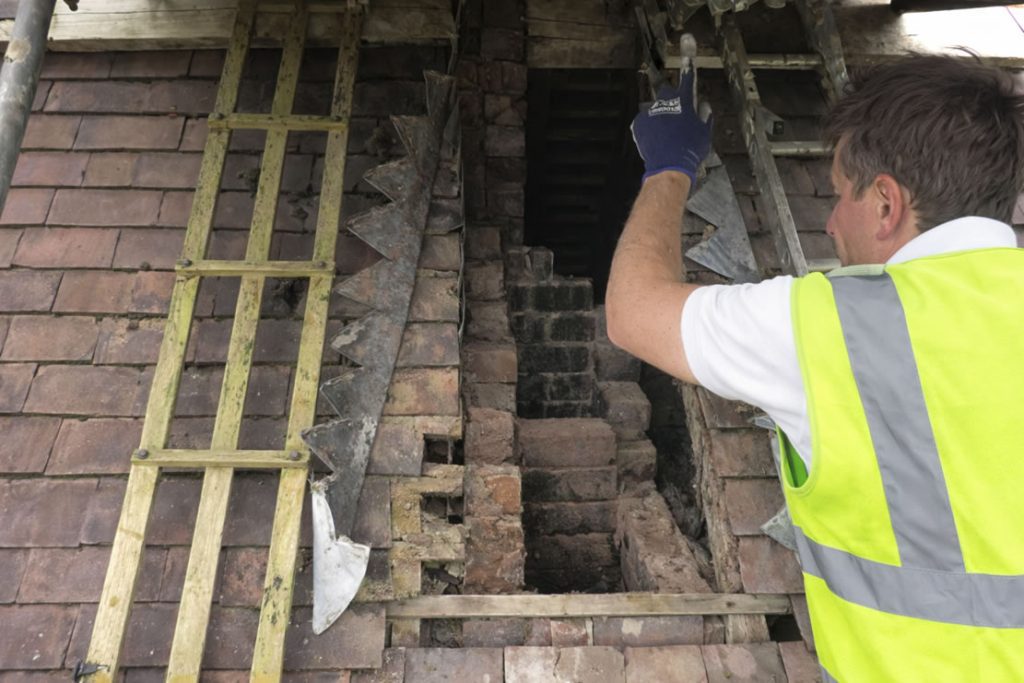
- They carefully dismantle the stack to below roof level.
- They remove flashing and old materials around the stack.
- They rebuild the roof area: underlay, battens, tiles/slates, ridge and flashing where needed.
- They clear debris and ensure the roof remains fully weatherproof.
This staged approach keeps the roof watertight and avoids hidden weak points around the former chimney location.
What Happens During Internal Chimney Breast Removal?
Internal removals often require:
- Temporary support while the team removes masonry
- Permanent support (commonly a structural beam)
- Making good walls/ceilings and patching floors
- Dust control and heavy waste removal
Because chimney breasts can support masonry above, structural planning matters. Therefore, contractors often involve a structural engineer for calculations where required.
Alternatives to Full Removal (Often Cheaper and Faster)
If you want fewer risks and less disruption, consider:
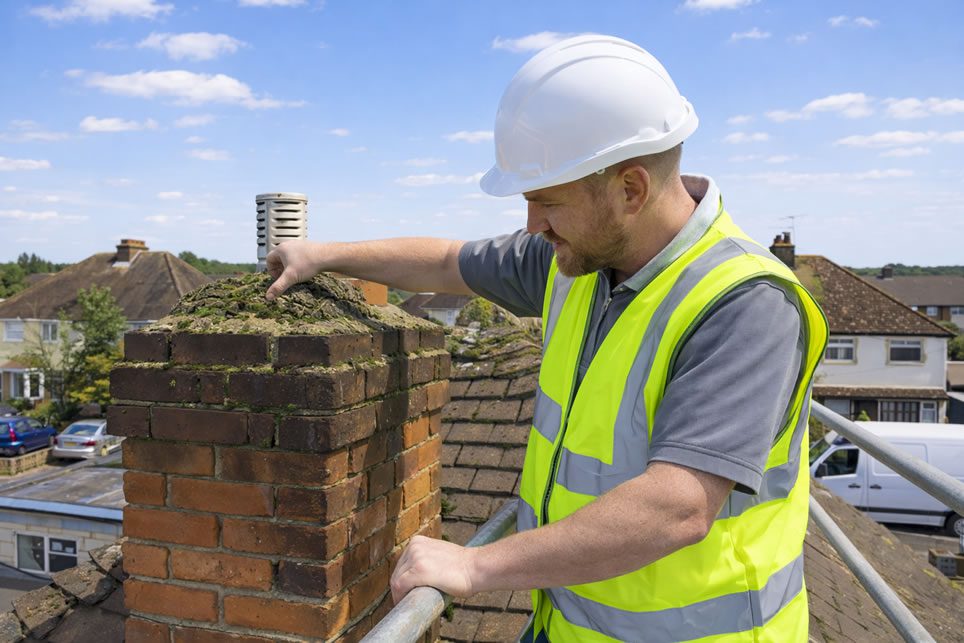
- Chimney capping + ventilation (reduce rain entry, prevent condensation)
- Flashing repair and repointing (if you mainly want to stop leaks)
- Stack reduction (lowering a tall stack rather than full removal)
These options can deliver the benefits without major structural works.
How to Get Chimney Removal Quotes
Step 1: Choose the type of removal
For example: “remove stack above roofline” or “remove chimney breast in living room”.
Step 2: Add your postcode
Then local specialists can review the job.
Step 3: Compare quotes and plan the work
Finally, compare access, structural requirements, timescales, and what “making good” includes.
Get Free Chimney Removal Quotes
FAQs – Chimney Removal
Is chimney removal safe?
Yes, when the contractor designs the work properly and supports any remaining masonry. However, it’s not a DIY job because structural loads can shift.
Can I remove a chimney breast myself?
It’s not recommended. You can destabilise masonry above and create serious safety risks. Professional support and Building Control guidance usually apply.
Do I need scaffolding?
For stack removal above roofline, often yes. Safe access helps protect the roof finish and reduces risk of damage.
Will removing a chimney stop leaks?
If the chimney caused the leak, removing the stack and making good the roof usually solves it. However, contractors should still check nearby flashing, valleys, and ridge lines.
How long does chimney removal take?
Small stack removals can sometimes complete in a couple of days once access is in place. Full removals take longer, especially with structural supports and internal making good.
What if I share a chimney with a neighbour?
You may need to consider party wall requirements and the impact on neighbouring masonry. A contractor can advise based on the property type.