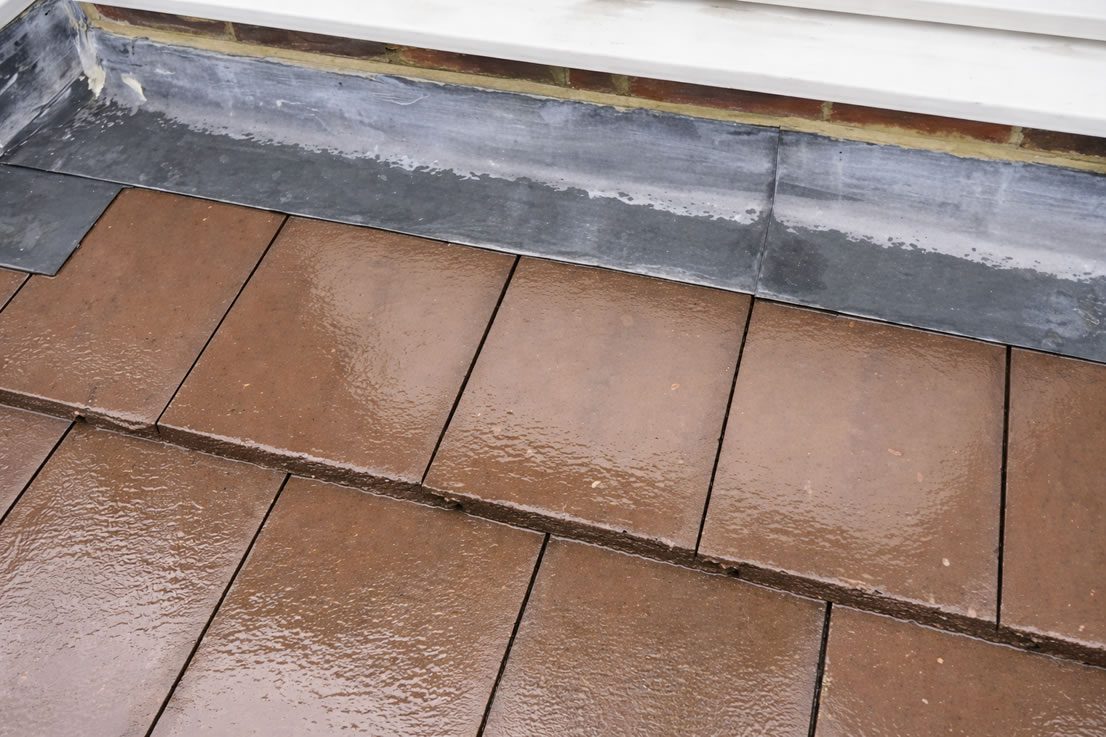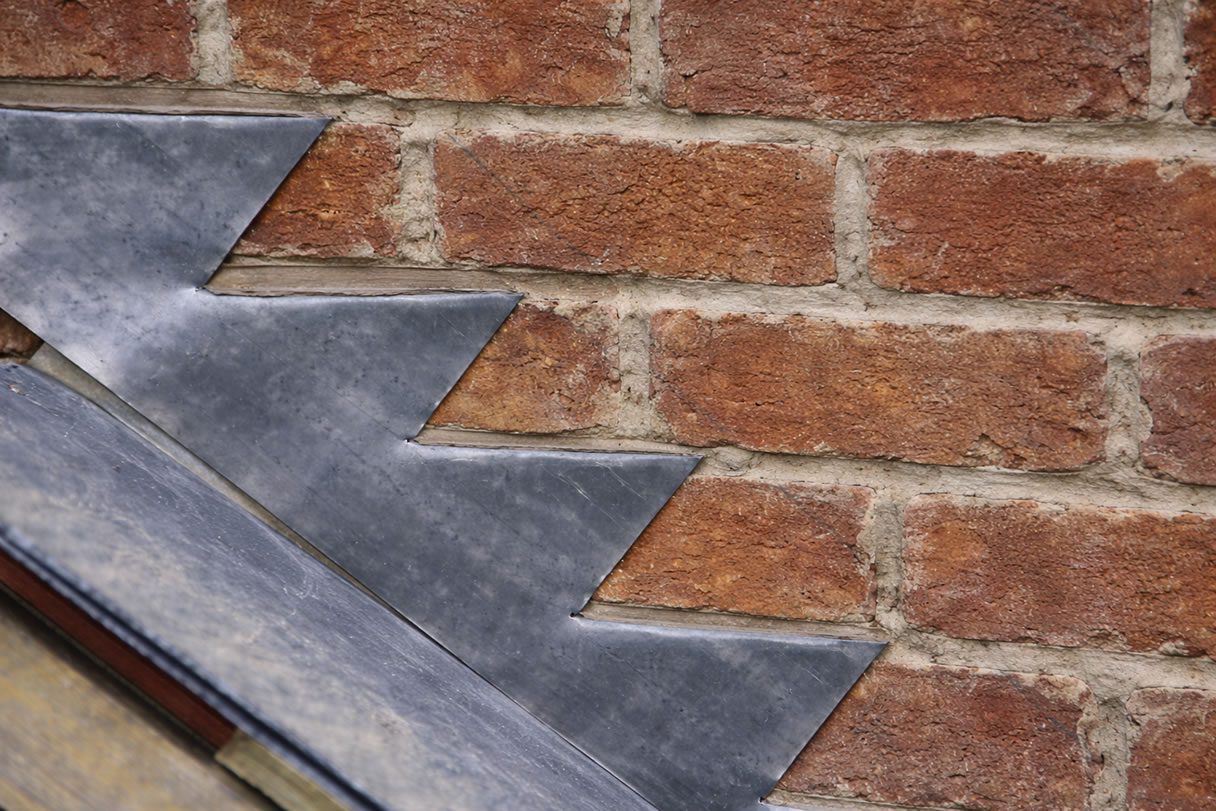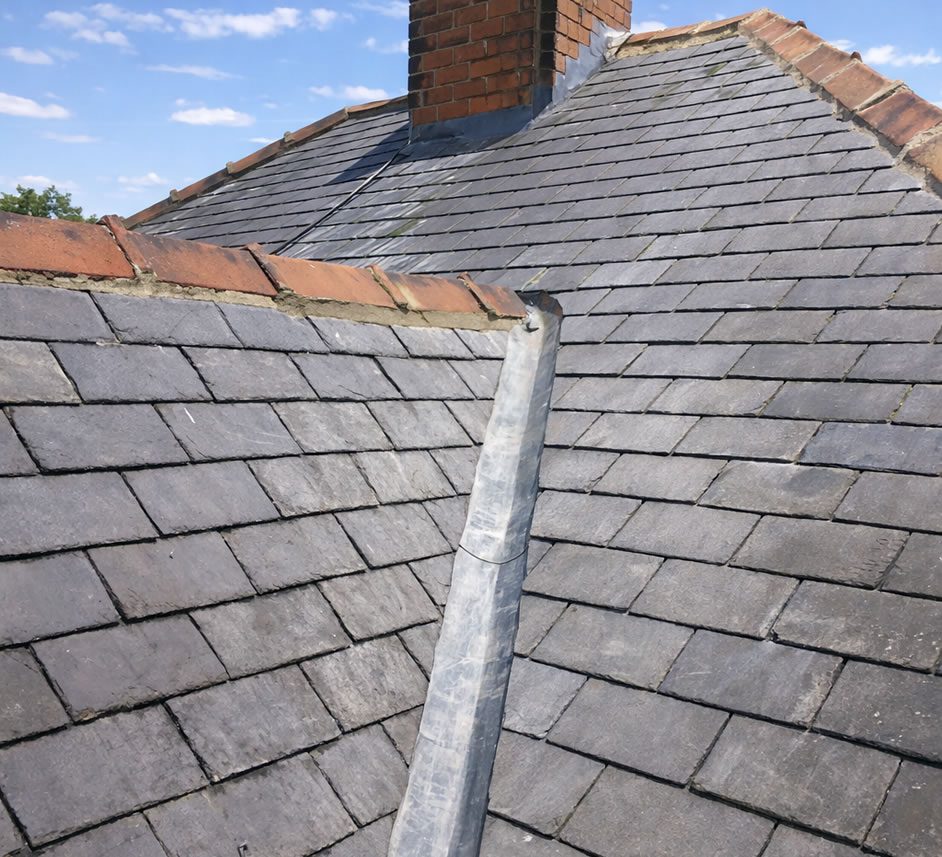
A roof valley is the internal angle where two roof slopes meet. It handles a huge amount of rainwater, especially in storms. Therefore, when a valley fails, leaks can look dramatic even if the roof tiles around it look fine from the ground.
In the UK you’ll usually come across lead valleys (traditional) and GRP valleys (fibreglass valley troughs used on many tiled roofs). Both can work well. However, they fail in different ways, and the “best” repair depends on what’s gone wrong and how the valley was installed.
Quick Overview: Lead vs GRP Valleys
| Valley type | What it is | Common on | Typical strengths |
|---|---|---|---|
| Lead valley | Lead sheet formed into a trough | Older roofs + higher-end work | Durable when installed correctly |
| GRP valley | Fibreglass valley trough system | Many modern tiled roofs | Consistent shape, lighter, tidy installs |

Why Valleys Leak (The Big Picture)
Valleys often leak because of:
- debris build-up (moss, leaves, broken mortar) that slows drainage
- poor detailing at the top or bottom of the valley
- movement and weathering over time
- tile edges that sit too close and block flow
- hidden damage under tiles near the valley line
Because valleys handle fast, concentrated water flow, even small defects can cause noticeable leaks.
Lead Valleys: Common Failure Points
1) Splits and cracks from fatigue (often along the centre line)
Lead expands and contracts with temperature. Over time, that movement can create fatigue, especially if the lead was installed without correct detailing.
What you might notice
- leaks during heavy rain
- staining near internal corners upstairs
- recurring leaks after “patch” repairs
Typical fix
Replace the affected lead section properly, including correct overlaps and dressing.
2) Poor laps and joints (water gets under overlaps)
Lead valleys rely on correct laps and secure detailing. If laps are too short or poorly formed, water can get under in heavy flow.
Typical fix
Rework joints/laps or replace the valley run if multiple areas are wrong.
3) Fixings and restraint issues (lead can creep)
Lead needs to be restrained properly. If it isn’t, it can “creep” over time, causing ripples, gaps, or movement at the edges.
Typical fix
Correct restraint detailing and replace distorted sections.
4) Debris build-up and blockages
Leaves and moss settle in valleys, especially where trees overhang. Blockages cause water to back up and find a path under tiles.
Typical fix
Clear the valley, check tile edges and underlay near the valley, and repair any damaged sections.
5) Incorrect tile cut/clearance
If tiles are cut too tight to the valley, water flow reduces and debris collects faster.
Typical fix
Adjust tile edges and ensure correct valley width and clearance.
GRP Valleys: Common Failure Points
1) Cracked GRP trough or damaged surface
GRP is tough, but impacts or poor handling can crack it. Also, a poorly supported trough can flex and stress.
What you might notice
- leaks that appear suddenly after storms
- visible cracks if you can safely view the valley
- water marks tracking along the valley line
Typical fix
Replace the damaged trough section and ensure proper support.
2) Poor installation at junctions (top and bottom of valley)
GRP valleys need correct detailing where they start and where they discharge. If the outlet area is wrong, water can back up.
Typical fix
Rework the junction detail and ensure water exits freely into the gutter or adjacent channel.
3) Tile edges too close (again!)
Just like lead, GRP valleys need proper clearance. Tight tile edges create blockages, especially in heavy rain.
Typical fix
Re-cut/adjust tiles to restore flow and reduce debris trapping.
4) Underlay and support issues beneath the valley
If the valley board or support is poor, the valley can flex. That movement can break seals and cause leaks.
Typical fix
Repair support and replace valley components if necessary.
5) Debris build-up (GRP still blocks)
GRP valleys can still fill with moss and leaves. If water can’t flow quickly, it backs up.
Typical fix
Clear valley, address tile clearance, and improve maintenance if trees are nearby.
Lead Valley vs GRP Valley: Which Is Better?
There’s no universal winner. Instead, it comes down to correct installation and roof context.
Lead valleys are often best when:
- you want a traditional, long-lasting detail
- the roof is older or already has leadwork
- the valley shape is complex
GRP valleys are often best when:
- the roof is tiled and suited to GRP valley systems
- you want a consistent, tidy installation
- you’re replacing a failed modern valley setup
A good roofer will recommend what matches the roof design and the existing system.
Typical Valley Repair Costs (UK Guide)
| Work type | Typical cost range | Notes |
|---|---|---|
| Clear debris and minor valley check | £150–£350 | May be combined with gutter work |
| Localised valley repair (lead or GRP) | £250–£1,200 | Depends on access and scope |
| Replace a valley section | £600–£2,000+ | Depends on length and roof complexity |
| Scaffolding (if required) | £450–£2,000+ | Often needed for safe access |
How to Spot Valley Problems Safely (No Roof Climbing)
Step 1: Look for “internal corner” staining
Valley leaks often show as damp near internal corners upstairs.
Step 2: Check during rainfall from the ground
If you can do it safely, look for overflow or unusual water flow near the valley discharge.
Step 3: Scan the valley line with zoom
From the ground, look for debris build-up or broken tiles near the valley edges.
If you suspect a valley leak, submit a quick enquiry with your postcode and photos. We’ll match you with local roofers so you can compare free, no-obligation quotes.
FAQs
Do valleys leak more in heavy rain?
Yes. Valleys handle concentrated flow, so defects often show up in heavy rain first.
Can you patch a valley with sealant?
Sealant can fail quickly in fast-flow areas. Roofers usually prefer proper valley repairs or replacement for lasting results.
How often should valleys be cleaned?
If you’ve got overhanging trees or heavy moss growth, a regular check helps prevent blockages and overflow.