


Chimney flashing is one of the most common sources of roof leaks in the UK. When flashing fails, water can run straight into the roof structure and show up as damp on a chimney breast, stains on ceilings, or wet insulation in the loft. However, flashing problems often get blamed on “the chimney” in general. Therefore, it helps to understand what flashing does, how it fails, and what a proper chimney repair usually involves.
This guide covers the key symptoms, the most likely causes, and the typical fixes roofers use.
What Is Chimney Flashing?
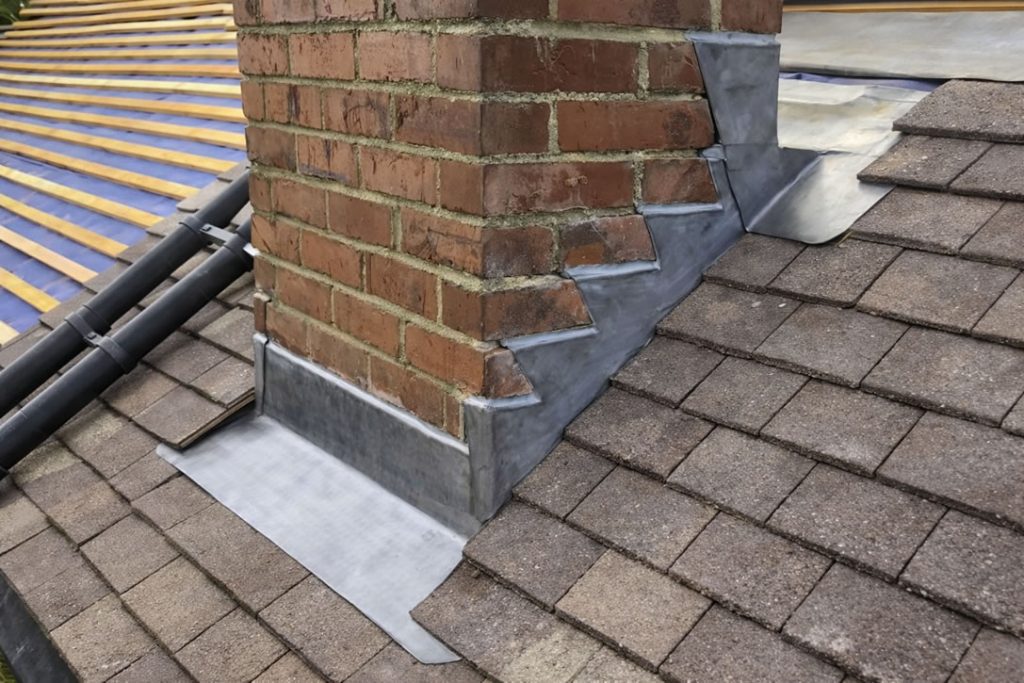
Chimney flashing is the weatherproof detail where the chimney meets the roof. It usually includes:
- step flashing along the sides (in stepped sections)
- an apron at the front (lower side)
- back flashing at the rear (upper side), often where water flow is heavier
- a chase line where the lead is tucked into mortar on the chimney
Its job is to shed water onto the roof covering so it drains safely away.
Symptoms of Chimney Flashing Failure
1) Damp patches on the chimney breast
This is the classic sign. It often worsens after heavy rain or wind-driven rain.
2) Brown ceiling stains near the chimney line
Stains can appear on ceilings near the chimney breast, or slightly away from it, because water can track along timbers.
3) Leaks only in windy rain
If it leaks mainly when it’s windy, flashing jumps to the top of the suspect list. Wind-driven rain can push water into small gaps and overlaps.
4) Wet insulation or staining in the loft near the chimney
A loft check often reveals the real story: water trails on rafters, damp felt/underlay, or wet insulation around the chimney stack.
5) Damp brickwork outside below the flashing line
If you notice darker damp brickwork or staining just below the flashing, the junction may be letting water behind.
Common Causes of Chimney Flashing Leaks
1) Lead has lifted or “pulled away”
Wind and roof movement can slowly lift lead edges. Once an edge lifts, water can be driven behind it in storms.
2) Cracked or failed chase mortar
The chase is the cut line where lead is tucked into the chimney and sealed. If the mortar cracks, water can run down behind the lead.
3) Poorly formed corners and overlaps
Corners and returns around a chimney are common weak points. If overlaps are too short or badly shaped, heavy rain can force water under.
4) Old, fatigued lead with splits
Lead expands and contracts with temperature. Over time, it can fatigue and split, especially if detailing and restraint were poor.
5) Previous “sealant fixes”
Sealant around leadwork can fail quickly. It can also hide the real gap and make the next repair harder.
6) Problems nearby that mimic flashing leaks
Sometimes the leak sits near the chimney but comes from:
- broken tiles around the stack
- a blocked valley above the chimney
- chimney pointing or chimney-top (flaunching) issues
That’s why roofers should inspect the full area, not just the visible lead.
Typical Solutions Roofers Use (What a Proper Repair Looks Like)
Solution A: Re-dress and secure the lead flashing (minor issues)
When lead is intact but slightly lifted, roofers may:
- re-dress the lead to sit tight on the tiles
- secure edges where appropriate
- renew chase sealing properly
- re-seat nearby tiles if needed
This suits early-stage issues with no lead splits.
Solution B: Repair or replace step flashing and soakers (common fix)
On many tiled roofs, roofers use step flashing with soakers beneath tiles to direct water. If these components fail, a roofer may replace sections properly.
This is often the right choice when:
- the leak repeats
- multiple overlaps have failed
- corners look messy or patched
Solution C: Replace the flashing system around the chimney (best for widespread failure)
If lead is split or multiple areas have failed, a full flashing replacement is often better value than repeated patching.
A good replacement typically includes:
- correct step flashing and apron/back detail
- secure chase line detailing
- tidy re-fitting of tiles around the stack
- a clear explanation of what caused the leak
Solution D: Combine flashing repair with chimney masonry work
If pointing is crumbling or the chimney top is cracked, roofers may recommend:
- repointing around the stack
- flaunching repair at the top
- fitting a suitable chimney cowl if rain enters the flue
This helps stop moisture entering from multiple routes.
Typical Chimney Flashing Repair Costs (UK Guide)
| Repair type | Typical cost range |
|---|---|
| Minor re-dress / chase reseal (localised) | £200–£450 |
| Repair/replace a section of flashing | £450–£1,200 |
| Full chimney flashing replacement | £700–£1,800+ |
| Repointing (if also needed) | £350–£1,200 |
| Flaunching repair (chimney top) | £250–£900 |
| Scaffolding (if required) | £450–£2,000+ |
Costs depend heavily on access, roof height, and chimney size.
How to Check for Chimney Flashing Issues Safely
You don’t need to climb onto the roof to gather useful clues.
1) Note the leak pattern
If it spikes in wind-driven rain, mention that.
2) Look at the chimney breast indoors
Check for fresh staining, bubbling paint, or damp patches near ceiling lines.
3) Check the loft near the chimney (if safe)
Use a torch and look for wet insulation or water trails on rafters near the stack.
4) Take zoom photos from the ground
Capture the chimney junction if possible. Even a slightly blurry photo helps roofers understand the layout.
When to Call a Roofer Urgently
Call promptly if:
- water drips near electrics or light fittings
- ceiling plaster is bulging or cracking
- damp spreads after each rainfall
- you can see missing tiles or visible storm damage near the chimney
FAQs
Is chimney flashing the most common cause of leaks near chimneys?
Yes, flashing is a very common culprit, especially when leaks appear in storms. However, pointing and chimney-top issues can also cause damp.
Can chimney flashing be fixed with sealant?
Sealant can fail quickly in weather and often doesn’t address the root cause. Proper repairs usually involve re-dressing or replacing the flashing system.
Do I have to replace the whole flashing to stop the leak?
Not always. If the lead is intact and the issue is localised, roofers can often repair sections. If lead has split or multiple points have failed, full replacement is often more reliable.
If you suspect a chimney flashing leak, don’t rely on guesswork. Submit a quick enquiry with your postcode and a photo of the staining. We’ll match you with local roofers so you can compare free, no-obligation quotes.


Pingback: Repointing a Chimney: When It’s Needed & What’s Involved (UK Guide)
Pingback: Chimney Leadwork Explained: Soakers, Step Flashing & Aprons (Homeowner Guide)
Pingback: How to Compare Roof Repair Quotes (Apples-to-Apples) — UK Guide