Roof repair quotes can look similar at first glance, yet the scope can be completely different. One quote might include scaffolding, waste removal and a proper warranty. Another might be “cash price” with vague wording and lots of extras later. Therefore, using a checklist helps you compare like-for-like and avoid surprises.
Below is a practical UK homeowner checklist you can copy into an email or use on the phone when roofers quote.
Quick Checklist (Copy/Paste)
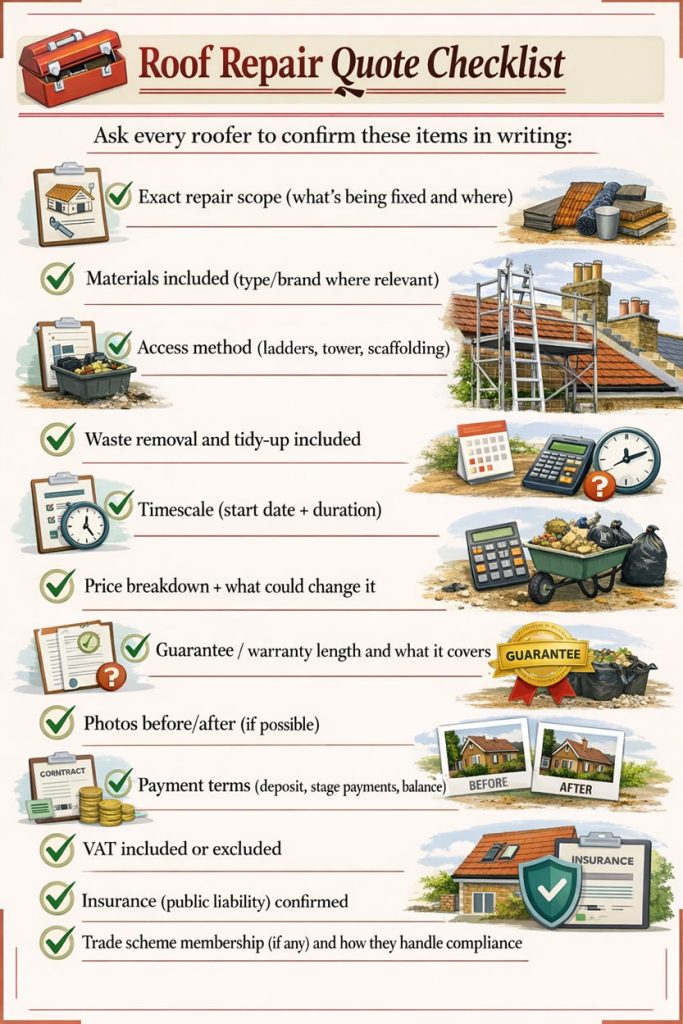
Ask every roofer to confirm these items in writing:
- Exact repair scope (what’s being fixed and where)
- Materials included (type/brand where relevant)
- Access method (ladders, tower, scaffolding)
- Waste removal and tidy-up included
- Timescale (start date + duration)
- Price breakdown + what could change it
- Guarantee / warranty length and what it covers
- Photos before/after (if possible)
- Payment terms (deposit, stage payments, balance)
- VAT included or excluded
- Insurance (public liability) confirmed
- Trade scheme membership (if any) and how they handle compliance
1) Scope: Exactly What Work Is Included?
Vague quotes cause arguments later. A proper quote should say:
- the exact location (front slope, rear valley, around chimney, garage roof edge, etc.)
- the problem being fixed (slipped tiles, failed flashing, split felt, ridge rebedding, blocked outlet, etc.)
- the repair method (repoint vs rebedding, patch vs overlay, replace vs repair)
Good wording example:
“Remove and replace 6 broken concrete tiles on rear slope, renew undercloak at verge where damaged, refix battens as required, and check surrounding tiles for secure fixing.”
Red flag:
“Fix leak” with no detail.
2) Materials: What Exactly Are You Paying For?
Ask for:
- material type (felt/EPDM/GRP/lead/tiles/slates)
- whether they will use matching tiles where possible
- thickness/spec where relevant (felt system, EPDM membrane thickness, GRP laminate/topcoat)
- whether trims/outlets/flashings are new or reused
If you can’t match tiles perfectly, the roofer should tell you upfront.
3) Access and Safety: Ladders vs Scaffold (And Who Pays?)
Access affects cost and quality.
The quote should confirm:
- access type: ladder, tower, scaffolding
- whether scaffolding is included in the price
- whether it’s needed for a one-day job or multi-day job
- safety provisions (especially for chimney work and two-storey roofs)
Tip: If one quote includes scaffolding and another doesn’t, the cheaper quote may not be cheaper once access is added.
4) Hidden Damage Allowance: What Happens If They Find More Issues?
Roof repairs sometimes uncover:
- rotten battens
- damaged felt/underlay
- wet decking on flat roofs
- loose ridge/verge sections
- degraded flashing details
A good quote will explain:
- what’s included as standard
- what counts as “extra”
- how extras are authorised (photo evidence + price before work continues)
5) Waste Removal and Tidy-Up: Is It Included?
Ask whether the quote includes:
- removal of old felt, tiles, mortar, lead offcuts
- skip hire (if needed)
- disposal fees
- a final tidy of gutters/paths where debris falls
If disposal is not included, costs can jump.
6) Timeframes: Start Date, Duration, and Weather Delays
The quote should state:
- estimated start date or lead time
- expected duration (hours/days)
- how weather delays are handled
- whether they will tarp/protect the area if rain hits mid-job
You want clarity, especially for active leaks.
7) Price Breakdown: What’s Included and What Isn’t?
At minimum, the quote should show:
- labour cost
- materials cost
- access cost (scaffold/tower)
- VAT status (included/excluded)
Also confirm:
- call-out fees (if any)
- whether the price changes if they need extra visits
8) Guarantee / Warranty: What’s Covered and For How Long?
Ask:
- warranty length (and whether it’s written)
- what it covers (workmanship, materials, both)
- what voids it (blocked gutters, storm damage, lack of maintenance)
- whether they offer follow-up checks
A guarantee is only useful if it’s clear and realistic.
9) Proof of Insurance and Credentials
You don’t need a roofer with every badge, but you do want:
- public liability insurance (ask for a copy/certificate)
- clear company details on the quote
- trade association membership if claimed
If they mention memberships, ask what it means in practice for standards and complaints.
10) Photos and Evidence (Especially for Leaks)
A strong roofer will:
- take photos of the suspected entry point
- explain the diagnosis
- show before/after photos
This helps you understand what you’re paying for, and it reduces disputes later.
11) Payment Terms: Keep It Clear
The quote should state:
- deposit required (if any)
- stage payments (if a bigger job)
- balance payment terms
- payment methods accepted
Be cautious with large upfront payments for small roof repairs.
12) Common “Extras” to Ask About Upfront
Ask if these are included:
- ridge/verge re-bedding vs repointing
- replacing underfelt/underlay locally
- batten replacement (localised)
- repointing chimney while scaffolding is up
- replacing gutters/downpipes if overflow contributed
- making good internal plaster damage (often excluded)
How to Compare Quotes Properly (A Simple Method)
Step 1: Line up scope first
If the repair method differs, you’re not comparing the same job.
Step 2: Compare access and waste
Scaffolding and disposal change the total cost.
Step 3: Compare warranty and clarity
Clear scope + photos + warranty usually indicates a more professional job.
Want to compare roof repair quotes quickly? Submit one enquiry with your postcode and a short description. We’ll connect you with local roofers so you can compare free, no-obligation quotes.
FAQs
Why are roof repair quotes so different in price?
Prices often differ because the scope isn’t the same. Access method, materials, hidden damage allowance, and warranty also vary.
Should a roofer inspect before quoting?
For small visible repairs, roofers may estimate from photos. For leaks or chimney work, an inspection often leads to a more accurate quote.
Should scaffolding always be included?
Not always. However, safe access improves quality on many jobs, especially around chimneys and two-storey roofs.