


If you’ve been told your chimney needs “flaunching repair”, you’re not alone in wondering what that even means. Flaunching is the mortar at the very top of the chimney stack that seals around the chimney pots and helps shed rainwater away from the brickwork. When it cracks, water can soak into the chimney, cause damp on the chimney breast, and speed up frost damage. Typically done as par of chimney repairs.
Below is a clear explanation of what flaunching is, why it fails, what symptoms to watch for, and what roofers usually do to fix it.
What Is Flaunching?
Flaunching is the sloped mortar “cap” on the top of a chimney stack. It sits around the base of the chimney pots and forms a weatherproof slope so water runs off the chimney top rather than sitting on it.
A well-formed flaunching:
- seals gaps around pots
- sheds rainwater away from the stack
- supports chimney pots in a stable position
- helps reduce water soaking into brickwork
It’s different from:
All three can cause chimney leaks, but they fail in different ways.
Why Does Flaunching Crack?
Flaunching lives in a harsh spot: fully exposed at the highest point of the roof. As a result, it commonly cracks due to a mix of weathering and movement.
1) Freeze–thaw damage
Rainwater gets into tiny hairline cracks. Then it freezes, expands, and widens the crack. Over repeated cycles, small cracks become large ones.
2) Heat movement from the flue
When the fireplace or stove is used, the pots and top of the stack warm up. When they cool down again, expansion and contraction stresses the mortar.
3) Poor mix or weak mortar
If the mortar mix was too weak, too sandy, or poorly compacted, it can crumble early.
4) Chimney pot movement
If pots shift or are not properly secured, they can stress the flaunching. Movement creates cracks around the pot base.
5) Age and weather exposure
Even well-installed flaunching can fail over time due to constant exposure to wind, rain, and UV.
6) Poor shaping (water sits instead of draining)
Flaunching should be properly sloped. If it’s too flat or uneven, water ponds and increases cracking risk.
Symptoms of Cracked or Failed Flaunching
Outside signs (often visible from the ground with zoom)
- cracks around the base of chimney pots
- missing chunks of mortar on the chimney top
- pots leaning slightly or looking unstable
- damp staining on the chimney stack below
Inside signs (leaks and damp)
- damp patches on the chimney breast after rain
- staining near ceilings by the chimney line
- musty smell in the loft near the stack
- persistent damp that takes a long time to dry
Because water can travel inside the roof, damp may not show directly below the chimney top. Therefore, roofers often check the loft too.
Why Cracked Flaunching Matters
Cracked flaunching is not just cosmetic.
1) It lets water into the chimney stack
Once water enters the top, it can soak into bricks and mortar joints and show as damp indoors.
2) It accelerates brick damage
Wet bricks are more likely to spall (flake) in frost, which can turn a small top repair into a bigger rebuild.
3) It can loosen chimney pots
If the pot is no longer supported properly, it can shift over time. In high winds, that becomes a safety risk.
4) It can mimic other chimney leaks
Flaunching leaks often get mistaken for flashing or pointing issues. A proper inspection checks all three.
Typical Solutions Roofers Use
Option A: Localised flaunching repair (minor cracks)
For early-stage damage, roofers may:
- remove loose mortar
- re-form small areas around the pot base
- ensure proper slope for water run-off
This suits minor cracking where the bulk of the flaunching remains sound.
Option B: Remove and replace flaunching (common)
If cracking is widespread or chunks are missing, full replacement is often best:
- remove failed flaunching
- re-bed/secure pots if needed
- re-form new flaunching with correct falls
- finish neatly for water run-off
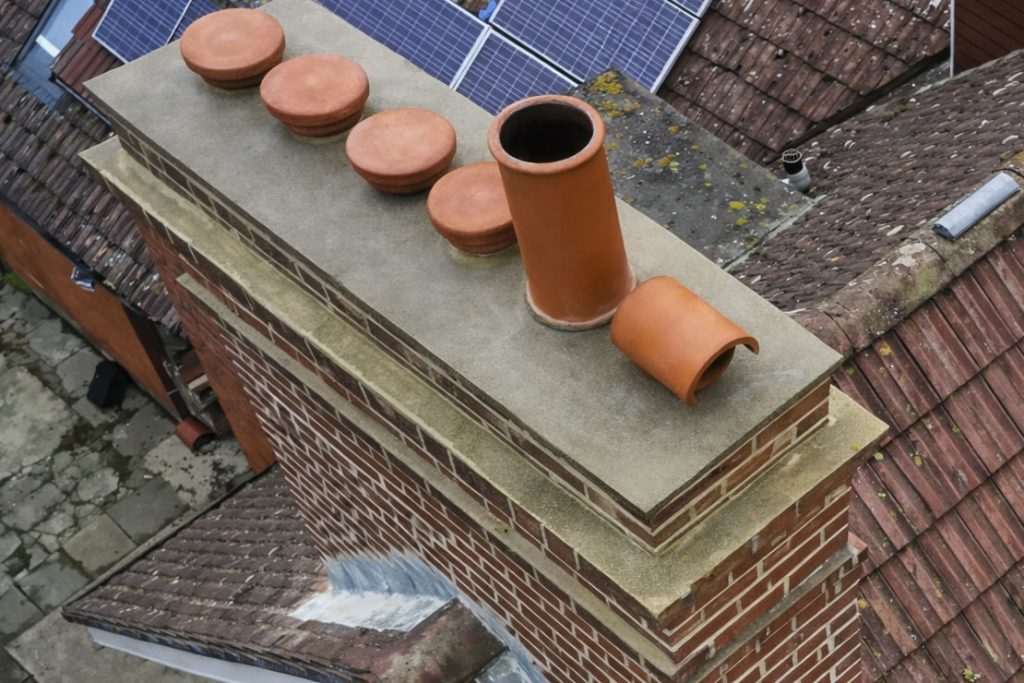
Option C: Add or replace a chimney cowl (if rain enters the flue)
If water enters directly down the pot, a roofer may recommend a suitable cowl. This can be especially helpful for unused fireplaces.
Typical Flaunching Repair Costs (UK Guide)
| Work type | Typical cost range |
|---|---|
| Minor localised flaunching repair | £250–£600 |
| Replace flaunching on a typical chimney | £400–£1,200 |
| Add-on: secure/replace chimney pot | £150–£600 |
| Add-on: fit/replace chimney cowl | £150–£450 |
| Scaffolding (if required) | £450–£2,000+ |
Costs vary mainly due to access and chimney height.
How to Check Flaunching Issues Safely (No Roof Climbing)
Step 1: Use zoom from the ground
Look for cracks around the pot base and missing mortar at the top of the stack.
Step 2: Note any rain-linked damp indoors
If damp worsens after rain and the chimney breast is involved, mention that.
Step 3: Ask the roofer to inspect flashing and pointing too
A good quote should confirm whether the leak route is flaunching, flashing, pointing, or a combination.
If you suspect cracked flaunching, submit a quick enquiry with your postcode and photos to compare free, no-obligation quotes from local roofers.
FAQs
Is flaunching the same as pointing?
No. Flaunching is the mortar at the chimney top around the pots. Pointing is the mortar between the bricks down the stack.
Can cracked flaunching cause damp on a chimney breast?
Yes. Water can enter at the top, soak into the chimney stack, and show as damp indoors, especially after rain.
Do you always need scaffolding for flaunching repairs?
Not always, but safe access is essential. Many roofers use scaffolding for chimney-top repairs, especially on two-storey properties.

