When a roof starts leaking, it’s tempting to grab sealant and “just stop the drip”. However, some quick fixes can trap water, hide the real entry point, or make the next repair more expensive. The aim of a temporary fix is simple: reduce damage indoors and keep things safe until a roofer can carry out the proper repair.
Below are temporary measures that usually help without causing new problems — plus what to avoid.
Safety first: Don’t climb onto a wet or windy roof. Also avoid ladders if you’re not confident and equipped. A short-term indoor solution is better than a fall.
The Golden Rule of Temporary Fixes
A good temporary fix should:
- control water inside the property
- protect electrics and belongings
- avoid trapping moisture in the roof structure
- leave the roofer a clear path to inspect and repair properly
In other words, manage the symptom without creating extra damage.
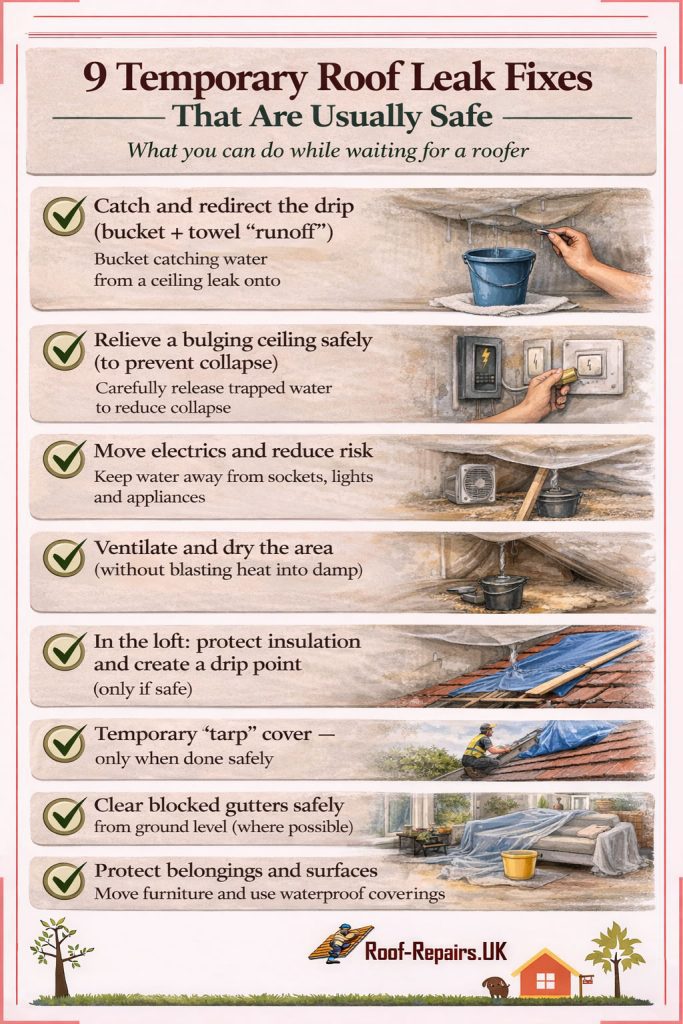
9 Temporary Roof Leak Fixes That Are Usually Safe
1) Catch and redirect the drip (bucket + towel “runoff”)
Start simple:
- put a bucket under the drip
- lay towels around it
- if water is splashing, place a cloth in the bucket to reduce noise and splash
If water is running along a ceiling before it drips, you can tape a short strip of plastic or a bin liner to guide the water into a container. This reduces spread.
2) Relieve a bulging ceiling safely (to prevent collapse)
If you see a ceiling bubble forming:
- place a bucket underneath
- use a small screwdriver or sharp object to make a tiny hole at the lowest point
- let the water drain slowly
This can reduce the risk of a sudden ceiling collapse. Do it carefully and stop if you feel unsafe.
3) Move electrics and reduce risk
If the leak is near light fittings or sockets:
- switch off the affected circuit at the consumer unit if you can identify it safely
- move extension leads and devices away
- avoid touching wet fittings
If water is dripping through a light fitting, treat it as urgent and call a roofer.
4) Ventilate and dry the area (without blasting heat into damp)
After you’ve contained the drip:
- open windows when weather allows
- use gentle airflow (a fan can help)
- avoid over-heating a wet plaster area too fast (it can crack)
Drying matters because it reduces mould risk and helps you monitor whether the leak continues.
5) In the loft: protect insulation and create a drip point (only if safe)
If you can access the loft safely (boards, stable footing):
- place a container under active drips
- move stored items away from wet insulation
- gently pull damp insulation back from the immediate drip area to reduce saturation
Don’t compress insulation around wet patches. Instead, keep the area clear so you can see changes.
6) Temporary “tarp” cover — only when done safely
A tarpaulin can help when there’s obvious storm damage, but only if you can do it safely and without climbing onto a fragile roof.
If a professional can fit a temporary cover, it should:
- extend above the damaged area so water sheds away
- be secured properly (not just weighted at the bottom)
- avoid blocking gutters and drainage paths
If you can’t do it safely, don’t attempt it. A roofer can do a making-safe visit.
7) Clear a blocked gutter safely from ground level (where possible)
If the leak is near an external wall and the gutter overflows in rain, the gutter may be part of the problem.
Safe options:
- use a stable ladder only if you’re confident and conditions are dry
- or use a gutter vacuum / long gutter scoop from the ground if you have one
If you can’t do it safely, don’t. Tell the roofer you suspect gutter overflow.
8) Protect belongings and surfaces
Use:
- plastic sheeting over furniture
- trays under wet areas
- old towels along skirting boards if water runs down walls
This doesn’t fix the leak, but it stops a small drip from becoming a bigger interior repair.
9) Document everything for the roofer
Take:
- photos of stains and drips
- pictures of the roof from the ground (zoom)
- notes on when it happens (heavy rain, wind-driven rain, constant)
This speeds up diagnosis and makes quotes more accurate.
Temporary Fixes to Avoid (They Often Make Things Worse)
1) Smearing sealant everywhere
It can:
- trap water behind the repair
- hide the real entry point
- fail again in wind-driven rain
- make leadwork and flashing harder to repair properly
A roofer may need to remove a messy sealant job before doing the correct fix.
2) Spraying expanding foam
Foam can:
- trap moisture in timbers
- block drainage routes
- make future repairs messy and expensive
It’s rarely a good idea for roof leaks.
3) Nailing or screwing random boards onto tiles
This can crack tiles, create new holes, and increase damage. It also makes safe repair harder.
4) Painting over the stain before the leak is fixed
It hides the problem and makes it harder to track whether water is still coming in. Fix the leak first, then redecorate once everything has dried.
When “Temporary” Should Be “Call a Roofer Now”
Get help promptly if:
- water is near electrics or light fittings
- the ceiling is sagging, cracking, or bulging
- you can see missing tiles or storm damage
- the leak is heavy and continuous
- you suspect a chimney, valley, or skylight flashing problem
- a flat roof feels soft or sagging
How to Request the Right Help (So It Gets Fixed Faster)
Step 1: Explain the leak pattern
Is it heavy rain only, windy rain, or constant?
Step 2: Describe the location
Which room, and where on the ceiling or wall?
Step 3: Send photos
Inside stains + ground-level roof photos.
If you want, submit a quick enquiry with your postcode and we’ll match you with local roofers so you can compare free, no-obligation quotes.
FAQs
Can I put a bucket in the loft under the leak?
Yes, if you can access the loft safely. It helps protect ceilings and insulation.
Should I turn the heating up to dry it faster?
Gentle drying helps, but don’t blast heat directly at wet plaster. Use ventilation and steady airflow instead.
Is a tarp a good temporary solution?
It can help when installed properly and safely. However, it’s not worth risking a fall to fit one yourself.
Why shouldn’t I use sealant as a temporary fix?
Because it often fails again in storms and can trap water or make the proper repair harder.