A garage roof can leak for simple reasons: blocked drainage, ageing felt, cracked flashing, or a slipped sheet near the edge. The tricky part is that water often enters at one spot and shows up somewhere else inside. Therefore, it helps to know the usual entry points so you can describe symptoms clearly and get the right repair first time.
This guide covers the most common garage roof types in the UK and where they typically leak.
First: What Type of Garage Roof Do You Have?
Most UK garage roof repairs fall into one of these categories:
- Flat felt roof (common on older garages)
- EPDM rubber roof (common on newer upgrades)
- GRP fibreglass roof (popular on extensions and garages)
- Corrugated sheets (metal, bitumen, or plastic/polycarbonate)
- Pitched tiled/slate roof (less common, but still seen)
- Asbestos cement sheets (older garages — specialist handling required for asbestos removal)
Your leak entry points depend on the roof type, but edges and junctions are the usual suspects either way.
The Most Common Garage Roof Leak Entry Points
1) Edges and Drip Trims (Flat Roofs)
The roof edge is exposed, gets wind uplift, and often fails first.
What fails:
- felt lifting at the edge
- failed edge trims
- gaps where the membrane meets the fascia
- water tracking back under the edge in wind-driven rain
Clue: damp appears near the outer wall or along the edge line inside the garage.
2) The Main Seam or Joint Line (Felt / EPDM / Sheets)
Many garage roofs have seams because they’re built in sections.
What fails:
- worn felt seams
- EPDM seam tape failure (on larger roofs)
- corrugated sheet overlaps letting water blow back
- old “sealant fixes” peeling away
Clue: leak worsens in heavy rain and may appear as a line of damp across the ceiling.
3) The Outlet / Gutter / Downpipe Connection
A surprising number of “roof leaks” are actually drainage leaks.
What fails:
- blocked outlet causing water to back up
- cracked outlet fitting
- gutter joint leaks spilling onto the roof edge
- downpipe blockages causing overflow
Clue: leaks happen mainly during heavy rain, and you may see water overflowing outside.
4) Ponding Water and Low Spots (Flat Roofs)
If water sits on a garage roof, it stresses the covering and finds weak points.
What it leads to:
- felt blisters and splits
- GRP hairline cracking at stress points
- gradual deterioration around seams and outlets
Clue: leak appears after prolonged rain rather than short showers.
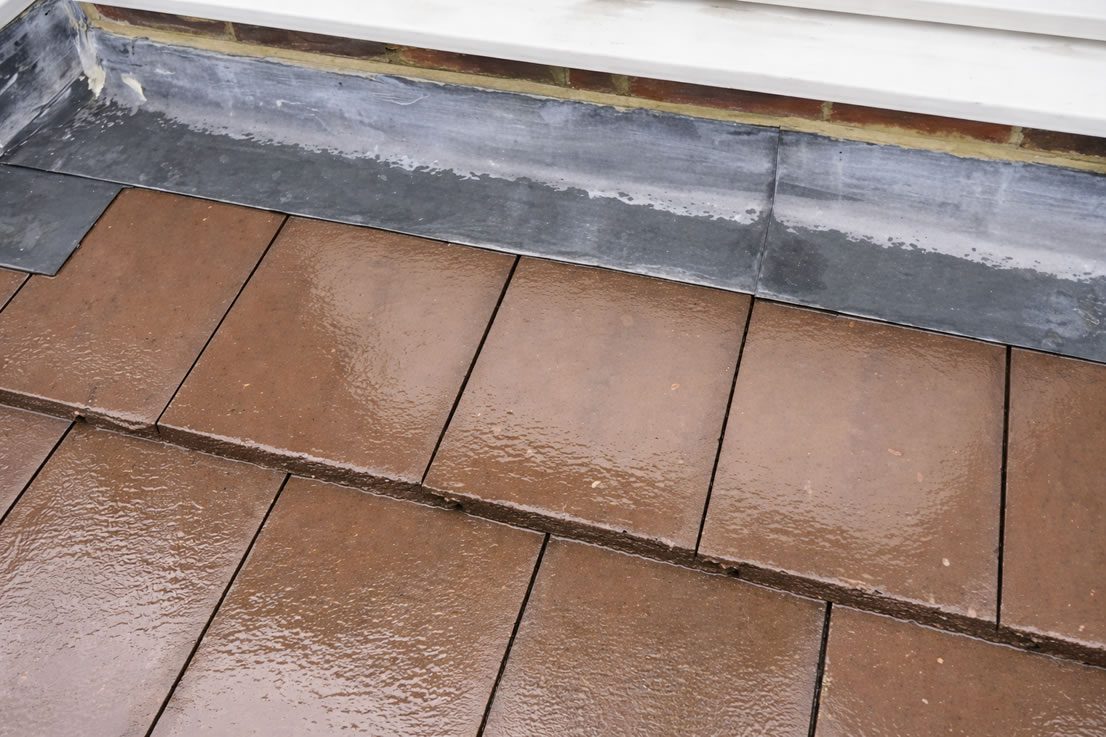
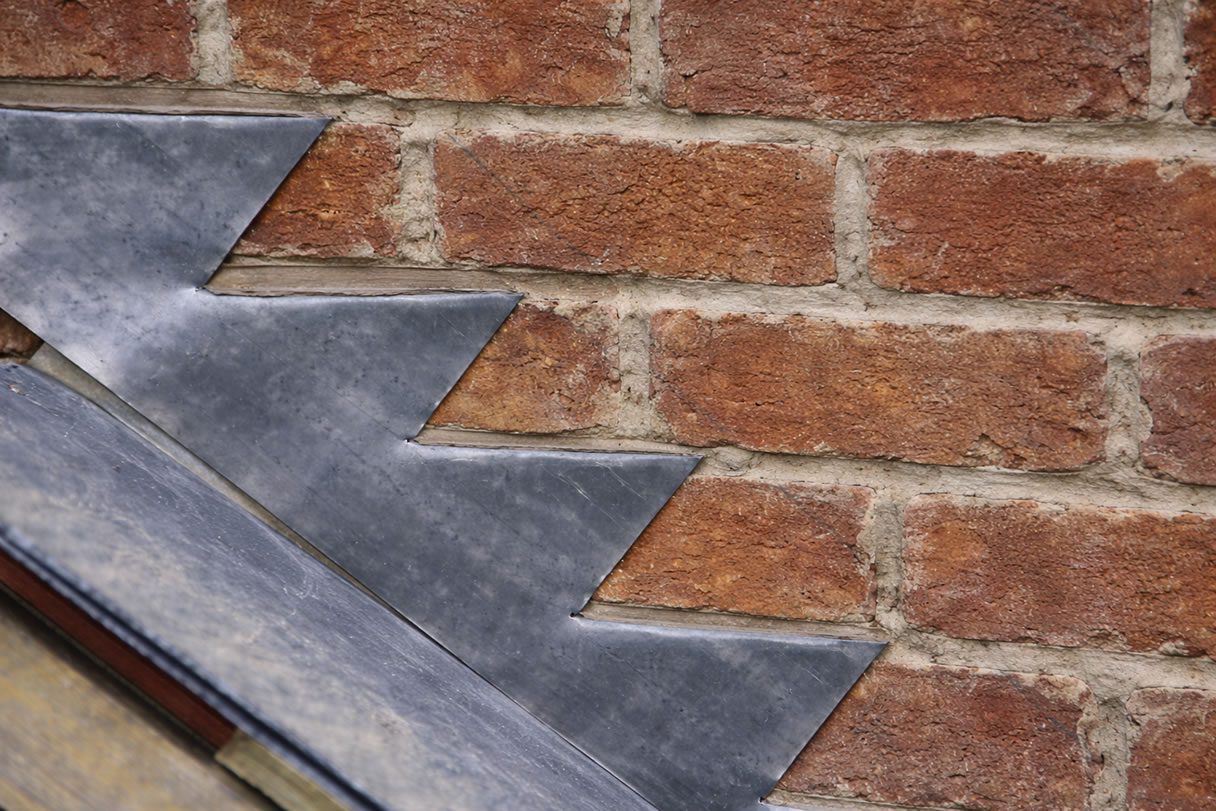
5) Wall Junctions and Flashings (Where Roof Meets a Wall)
Many garages attach to a house or sit against a wall. That junction needs proper flashing.
What fails:
- lead flashing lifting or cracked chase mortar
- old mortar fillets cracking (common on older garages)
- poor detailing where the membrane turns up the wall
Clue: damp appears along the wall line inside the garage, not the middle of the roof.
6) Rooflights, Vents, and Penetrations
Not every garage has these, but when it does, they’re common leak points.
What fails:
- failed seals around a rooflight
- cracks in GRP around kerbs
- poor EPDM detailing around pipes/vents
Clue: the damp patch forms close to the penetration, but water can still track.
7) Corrugated Sheet Fixings and Washers
On sheeted garage roofs, fixings are a classic entry point.
What fails:
- perished rubber washers
- loose fixings
- cracks radiating from screw holes
- overlaps that no longer sit tight
Clue: drips appear as single points, often in a row that matches the fixing line.
8) Ridge, Verge, and Bargeboard Details (Pitched Garage Roofs)
If the garage roof is pitched with tiles/slates:
What fails:
- cracked ridge mortar or loose ridge tiles
- gaps at the verge (gable edge)
- slipped tiles near the eaves
- valleys where the garage roof meets another slope
Clue: leaks worsen in wind-driven rain and can show near the gable end or ridge line.
9) Old Felt Cracks and “All-Over” Ageing
Sometimes the roof covering is simply past its best.
Signs:
- felt is brittle and cracked in many places
- repairs keep failing
- multiple damp patches appear over time
- the roof surface looks worn, thin, or patchy
Clue: you get new leaks in different spots each year.
10) Hidden Issues: Condensation Mistaken for a Leak
Garages are often cold and poorly ventilated. Condensation can drip from the underside of a roof and look like a leak.
Clues it may be condensation:
- water droplets form evenly across a wide area
- it’s worse on cold mornings
- it happens without rainfall
- there’s mouldy smell and general dampness
A roofer can help you rule this out quickly.
Typical Garage Roof Leak Repair Options
Once the entry point is identified, roofers usually recommend:
- local patch repair (for small, isolated defects)
- edge/junction repair (trims, flashings, outlets)
- overlay (for older roofs that are generally sound but worn)
- strip and replace (when the deck is damaged or the roof is failing widely)
Therefore, diagnosis first saves money.
How to Narrow Down the Leak Safely (Homeowner Steps)
Step 1: Record when it leaks
Heavy rain only? Wind-driven rain? After long periods of rain? Or even in dry weather?
Step 2: Find the highest wet point inside
Water travels downward. The highest wet point gives the best clue.
Step 3: Look outside from the ground
Check gutters, outlets, obvious lifted edges, and any junction to a wall.
Step 4: Take photos and request quotes
Photos help roofers spot likely failure points quickly.
If your garage roof is leaking, submit a quick enquiry with your postcode. We’ll match you with local roofers so you can compare free, no-obligation quotes.
FAQs
Why does my garage roof leak only in heavy rain?
Heavy rain increases water flow and can cause back-up at outlets, ponding in low spots, and water forcing into weak seams or edges.
Can I fix a garage roof leak with sealant?
Sealant can fail quickly outdoors. A proper fix usually involves repairing the seam, edge, outlet, flashing, or replacing failed washers on sheeted roofs.
Is it better to patch or replace a garage roof?
Patch works for local damage on a generally sound roof. If the covering is brittle with multiple leaks, replacement often becomes better value.