
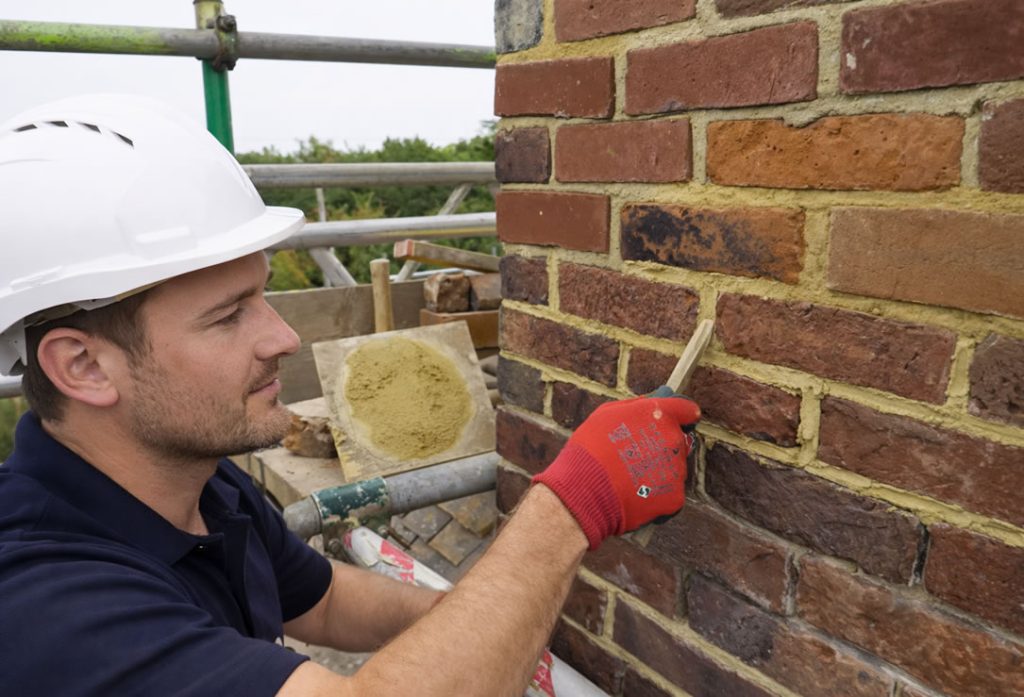
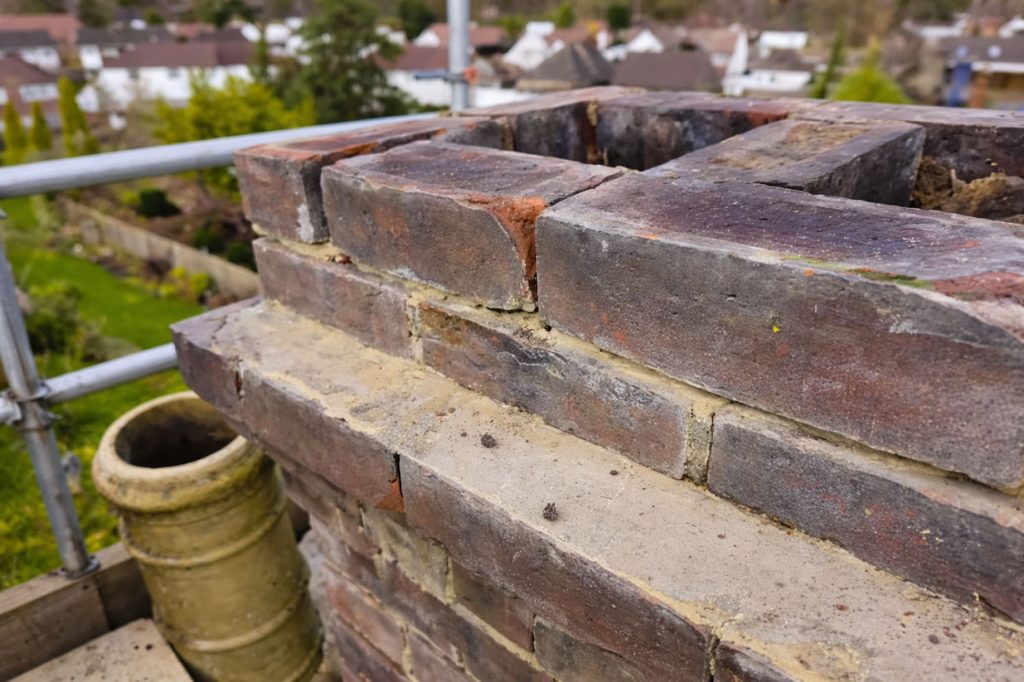
Roof Repairs UK helps you compare free, no-obligation quotes from local roofers for chimney and roof-junction repairs, including:
- Chimney repointing and minor brickwork repairs
- Lead flashing repairs/replacement (the most common leak point)
- Flaunching repairs (the mortar cap around chimney pots)
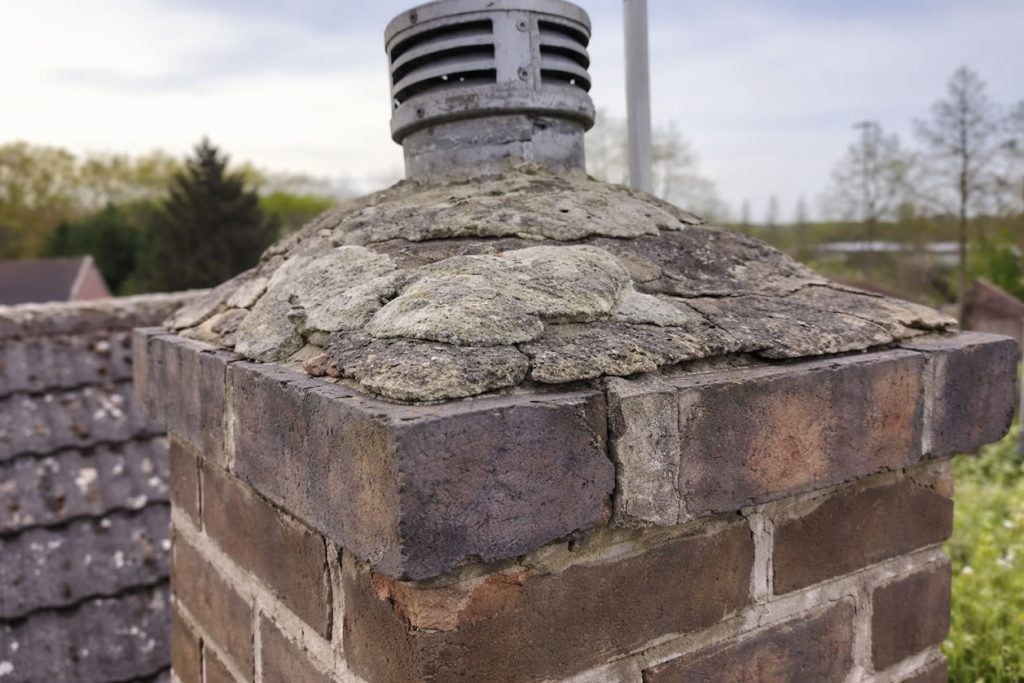
- Chimney capping and sealing (where appropriate)
- Chimney stack stability checks and making-safe work
- Repairs to surrounding tiles, ridges, and valleys near the chimney
Describe the chimney issue + add your postcode to get free quotes.
Common Signs You Need Chimney Repairs
You may need chimney repair work if you notice:
- Damp patches or brown staining around a chimney breast
- Drips that appear mainly in wind-driven rain
- Crumbling mortar or loose bricks on the chimney stack
- White staining on brickwork (efflorescence) or spalling bricks
- Loose or damaged chimney pots / cowls
- Debris in gutters below the chimney (mortar or brick grit)
- A persistent musty smell in loft spaces near the chimney
What Usually Causes Chimney Leaks?
Chimneys can leak for several reasons. Often, more than one issue occurs at once, so a roofer will inspect the full junction area.
| Likely cause | What happens | Typical repair |
|---|---|---|
| Failed lead flashing | Gaps open at the chimney/roof joint | Repair or replace flashing, re-dress and seal correctly |
| Weak pointing / mortar failure | Water penetrates through joints | Repoint chimney stack and repair damaged masonry |
| Damaged flaunching | Water runs under the flaunching cap | Repair/replace flaunching and secure pots |
| Cracked bricks / spalling | Frost damages brick faces | Replace damaged bricks and repoint |
| Poor or missing caps | Rain enters unused flues | Fit a suitable cap/vented cowl where appropriate |
| Tile issues around chimney | Tiles slip or gaps open at edges | Replace/re-fix tiles and check underlay at the junction |
Chimney Repair Cost Guide (UK)
Costs vary depending on chimney height, roof pitch, access, and the scope of the work. Use these ranges as a guide, then compare local quotes.
| Chimney repair type | Typical cost range | Notes |
|---|---|---|
| Chimney inspection / leak diagnosis | £80–£250 | Useful when leak source is unclear |
| Lead flashing repair (localised) | £300–£900 | Common fix for chimney leaks |
| Repointing (small chimney stack) | £350–£1,200 | Depends on height, access and condition |
| Replace damaged bricks (localised) | £250–£800 | Usually done alongside repointing |
| Flaunching repair | £200–£700 | Scope depends on pots and cap condition |
| Fit/replace chimney cowl | £120–£350 | Depends on access and pot type |
| Scaffolding (if required) | £450–£1,800+ | Often needed for safe chimney work |
Tip: Chimney repairs frequently need safe access. Therefore, a quote that includes proper scaffolding can protect both workmanship quality and your property.
What a Good Chimney Repair Quote Should Include
Chimney quotes vary because some roofers include the “roof side” work while others only price the masonry.
| Item to look for | Why it matters |
|---|---|
| Clear description of leak source (if known) | Helps you compare scope and avoid repeat issues |
| Flashing details (repair vs replace) | Flashing causes many chimney leaks |
| Repointing area and mortar finish | Ensures consistent, durable repair |
| Any brick replacement or stability work | Stops ongoing water penetration and movement |
| Access method and safety plan | Chimney work often needs scaffolding |
| Waste removal and making good | Prevents hidden extras |
Chimney Flashing and Leadwork (Why It Matters)
Lead flashing forms the waterproof seal between the chimney and roof. When it lifts, cracks, or pulls away, water can run straight into the roof space. For that reason, roofers often start with the flashing whenever you report a leak around a chimney breast.
Common flashing work includes:
- Re-dressing lead to sit tight against brickwork
- Replacing short failed sections
- Improving the seal at corners and steps
- Checking soakers and back gutter areas (where fitted)
Should You Repair, Remove, or Cap a Chimney?
If you still use the chimney (for a fireplace or stove), repair usually makes sense. However, if the flue sits unused, homeowners sometimes cap or ventilate it to reduce water entry while still allowing airflow.
A roofer can advise based on:
- whether the chimney remains in use
- the condition of the stack and pots
- the leak route (flashing vs masonry vs flue entry)
How to Get Chimney Repair Quotes
Step 1: Describe what you’ve noticed
For example: “damp around chimney breast”, “leak in loft by chimney”, or “crumbling chimney mortar”.
Step 2: Add your postcode
Then roofers who cover your area can respond.
Step 3: Compare quotes and choose
Finally, compare scope (flashing, repointing, flaunching), access requirements, timescales and cost.
Get Free Chimney Repair Quotes
FAQs – Chimney Repairs
Are chimney leaks usually caused by flashing?
Often, yes. Flashing sits at the roof junction, so small gaps let water in quickly. However, mortar and brickwork can also cause leaks, so a proper inspection helps.
Do I need scaffolding for chimney repairs?
Sometimes. Chimneys sit high and roof pitches can be steep, so roofers often use scaffolding for safety and a better finish.
Can a chimney leak look like a roof leak?
Yes. Water can track along timbers and underlay before it shows inside. Therefore, the stain might appear away from the chimney even when the chimney caused it.
What’s the difference between repointing and flaunching?
Repointing repairs the mortar joints between bricks. Flaunching is the mortar cap around chimney pots that helps shed water.
Should I cap an unused chimney?
Capping can reduce rain entry, but you still need ventilation to prevent condensation. A roofer can advise which cap/vent suits your setup.